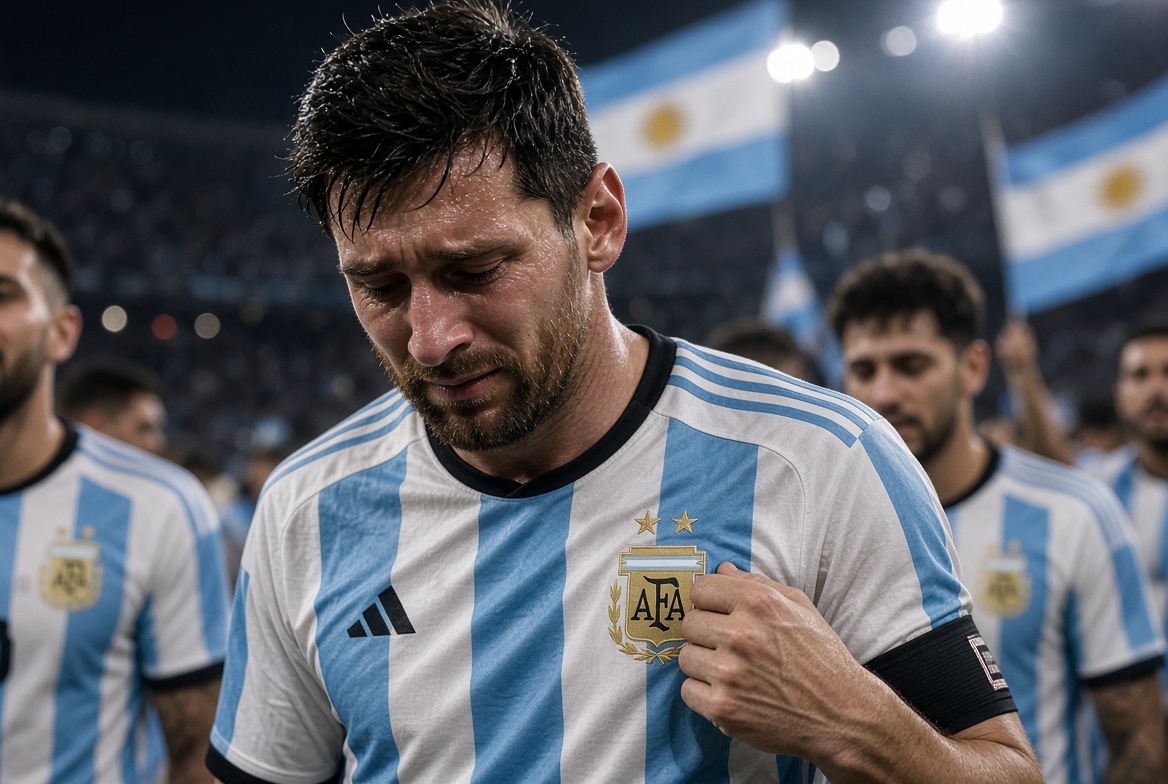
Was that really Messi’s last game in an Argentina shirt? That’s the question a lot of fans keep coming back to after a night that felt heavier than most. It wasn’t just another match. Something about the way he moved, the way the crowd reacted, and the way the whole evening unfolded made people start wondering if they had just watched the closing scene of a long story.
His latest appearance for Argentina has left supporters talking for days. Not only about what happened on the pitch, but about what it might mean for the future. At this stage of his career every single game carries a different kind of weight. Every touch of the ball, every quick look toward his teammates, every small reaction suddenly feels like something worth holding onto. Fans who have followed him for years found themselves paying closer attention than usual, almost as if they were trying to memorize the details in case there would be no more of them.
The debate that followed was predictable and still hard to settle. Was this a genuine farewell, or are people reading too much into one emotional night? Messi has already given Argentina memories that are not going anywhere. He finally lifted the World Cup, became the face of a generation, and helped settle one of football’s longest-running arguments about greatness. Those achievements are locked in. Yet football has a habit of refusing clean endings. Some supporters believe he should walk away while he can still choose the moment himself, leaving on his own terms before the body or the results force the decision. Others ask a simpler question: why stop when he can still influence matches and pull on that light-blue-and-white shirt with pride?
There is an emotional layer that makes this discussion different from most retirement talks. Watching Messi possibly approach the end of his international journey hits harder than it does with almost any other player. Argentina is not just another national team for him. It is the shirt he struggled in for years, the one he celebrated in, cried in, and eventually conquered the world with. That history sits underneath every appearance now. Fans who remember the early disappointments and the long wait for a major trophy feel the weight of that full circle. They do not want the story to end, even when part of them knows it has to end sometime.
The night itself added to the feeling. The way the stadium responded, the small gestures between players, the sense that something larger than ninety minutes was taking place, all of it fed the idea that this might have been more than a regular fixture. At the same time, nobody can be certain. Messi has surprised people before. He has continued when many expected him to stop. He has found new chapters when the previous ones seemed finished. That history keeps the door open, at least in the minds of those who still want one more game, one more tournament, one more moment in the Argentina colours.
So the question remains open for now. Was this the last time Lionel Messi wore the Argentina shirt? Nobody really wants to say goodbye yet. The idea of an Argentina side without him still feels incomplete to a large part of the football world. But if it truly was the final appearance, then the game delivered something fitting: a reminder of everything he has meant to the national team and to the people who followed him through the highs and the lows.
In the end the argument belongs to the fans. Some will keep hoping for another call-up, another summer, another chance to see him in that shirt. Others will say the time is right and that walking away now protects the legacy. Both sides have their reasons. What is clear is that the chapter, whenever it finally closes, will stand as one of the most complete international careers the game has seen. Until the next official word comes, the debate continues. Should Messi retire from international football, or does the Argentina legend still have one more page left to write?