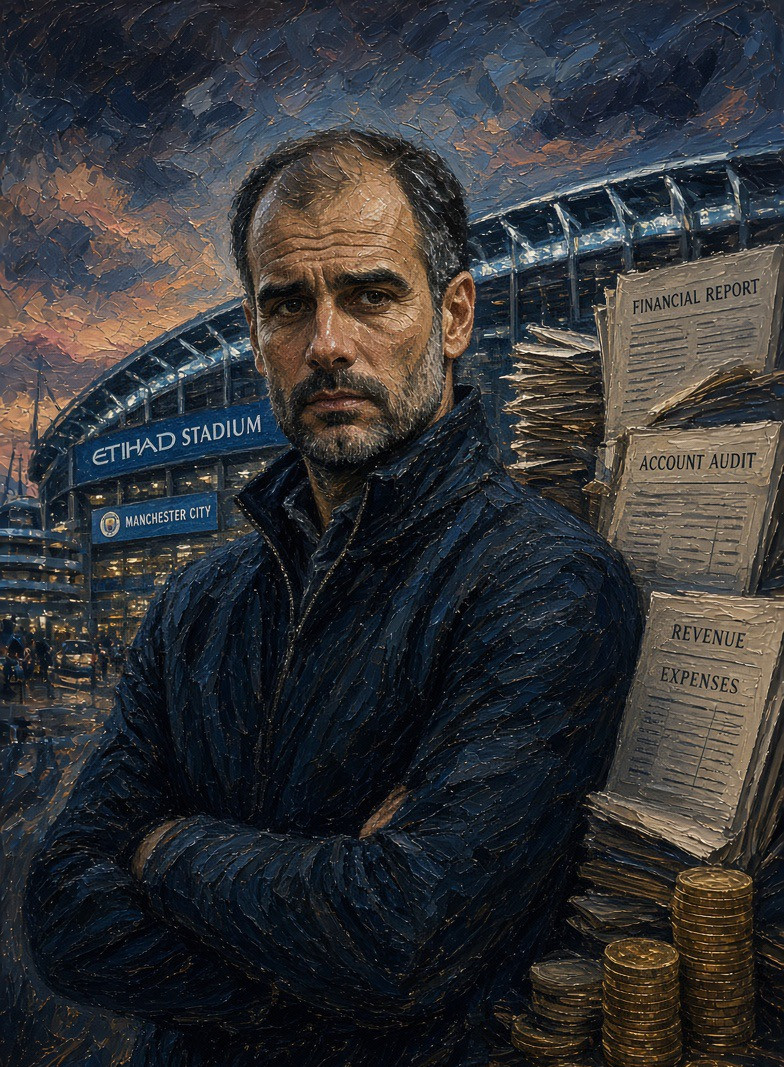
The Manchester City financial case has taken over every football conversation this week. The Premier League drops the guilty verdict, Guardiola steps out and stands with the club, and suddenly the whole thing feels bigger than just another regulatory story. You find yourself going back over the same details, trying to work out how it reached this point and what sits underneath it.
The core of it is the list of breaches the league says it found. Sham contracts and artificially inflated revenues are the ones that keep getting repeated. Those words alone carry weight. When a club has been this successful for this long, any finding that touches the money side immediately raises the temperature. You start asking how the deals were put together, how the numbers were presented, and why the league decided this was the moment to draw a hard line. The full evidence is still behind closed doors, so the discussion stays in the space of speculation and second-hand pieces.
What makes it stick is the length of time this has been hanging around. The charges were known about for years. Investigations don’t usually stay quiet that long without people filling the silence with their own theories. Some say the complexity of the financial structures made it slow. Others think the size of the club forced extra caution. Either way, the delay itself became part of the story. By the time the verdict arrived, everyone already had a version of events ready in their head.
Guardiola’s reaction is the other half of the current chatter. He didn’t leave any room for doubt. He backed the club in public and made it clear where he stood. That choice lands differently depending on who is listening. For some it reads as simple loyalty to the organisation that has supported his project. For others it feels like a statement that the football side of the club should not be treated as collateral. What’s noticeable is how prepared he seemed. There was no sense of shock in the way he spoke, which only adds to the feeling that this day had been expected inside the building for a while.
The bigger “why” questions refuse to go away. Why does a club operating at this level keep finding itself in these regulatory conversations? Is it the scale of the commercial operation that creates more points of friction with the rules? Is it the ownership model and the way revenue is generated across different markets? Or is it simply that success at this height attracts a level of scrutiny that smaller clubs never face? Those questions don’t have neat answers, but they keep the discussion alive because they touch on how the modern game actually works behind the results.
There’s also the competitive layer that nobody can pretend isn’t there. City have set the standard for years. When a team sits at the top that long, every decision around them gets read through the lens of rivalry. Supporters of other clubs see the verdict as overdue confirmation. City fans see it as another chapter in a long-running attempt to slow them down. The gap between those two readings is where most of the heat lives. Every new detail gets pulled into that existing argument.
What keeps the whole thing interesting is how many different levels are operating at once. There’s the pure regulation side — the contracts, the reporting standards, the league’s framework. There’s the football side — what it means for the squad, for the manager’s project, for the stability of the current era. There’s the public image side — how a club that has spent years building a certain global brand absorbs this kind of finding. And then there’s the quieter human side: the people who work in the offices and the training ground watching the story unfold and trying to understand what changes for them.
The open questions are the ones that will decide how long this stays at the centre of the conversation. What the final sanctions look like. Whether the club’s response goes beyond Guardiola’s initial backing. Whether other clubs start adjusting their own approaches because of what has been ruled here. For now the verdict is public, the manager has spoken, and the rest of the football world is still turning the details over, trying to work out what it actually means once the first wave of reaction settles.